BlogSeptember 22, 2026What spaza shops taught me about designing AI products
Lessons from designing for low connectivity, cheap phones and low literacy 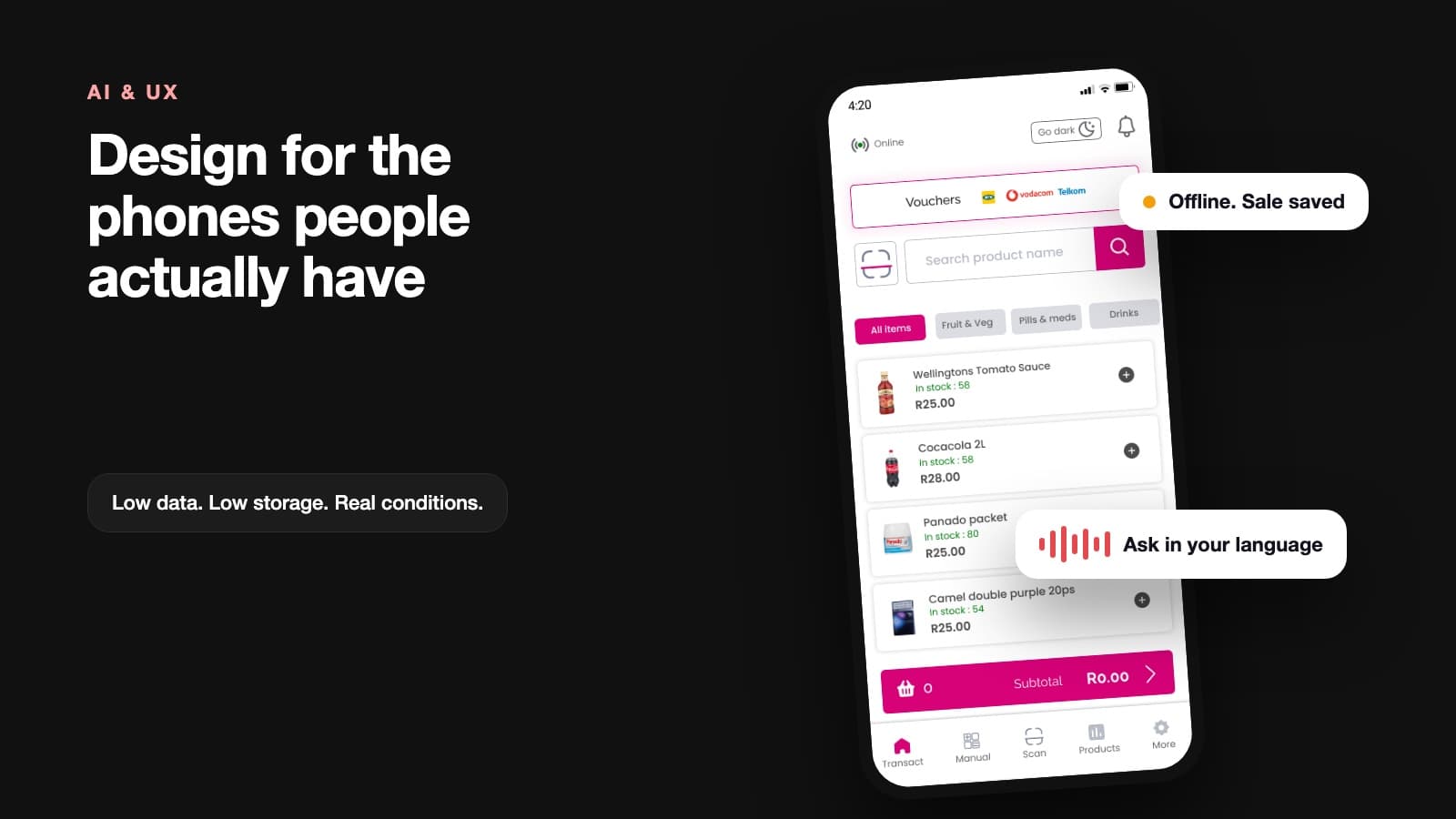
Offline first still matters
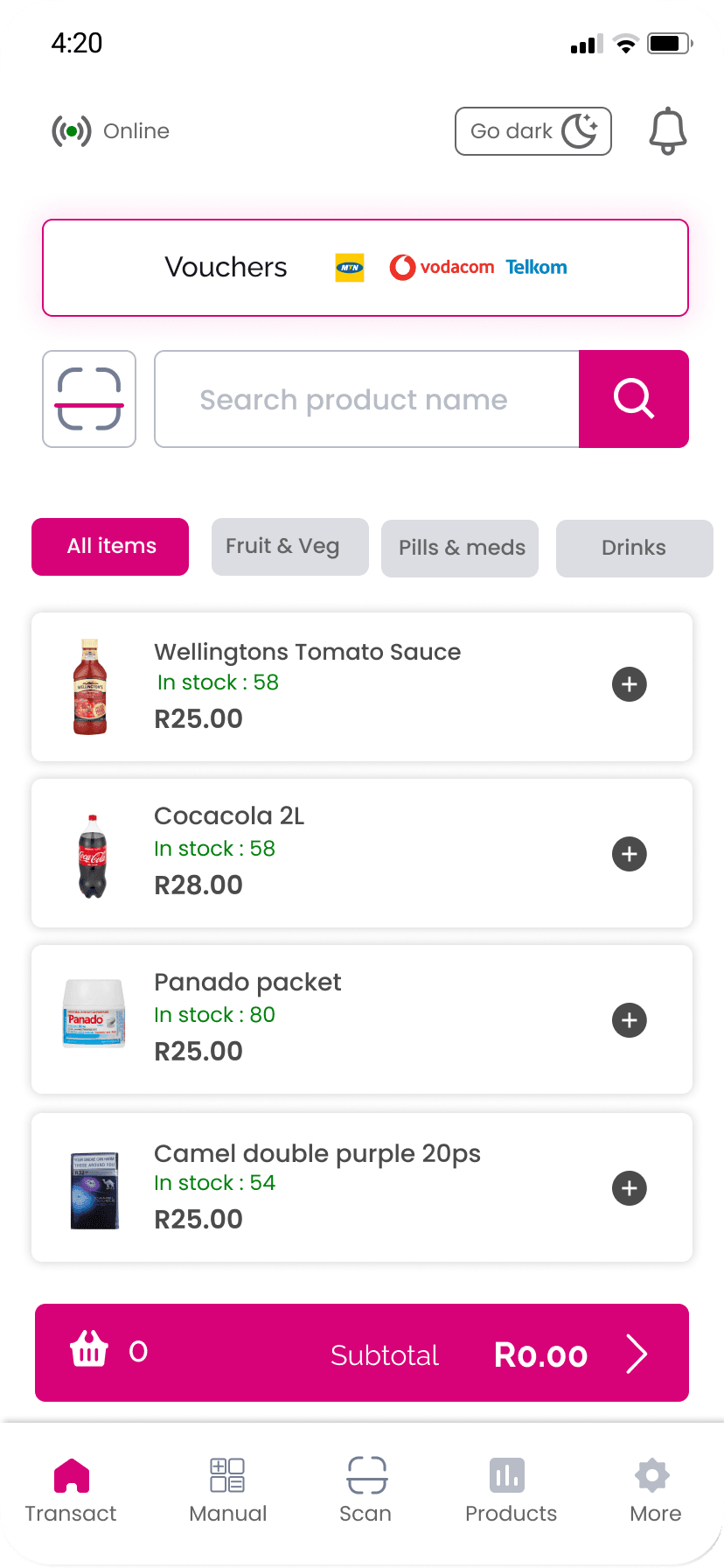
On MetaPOS, the single most important feature was taking card payments when the network was down. A sale that depends on the internet is a sale that can be lost. I designed the app to save transactions on the device and sync them when the connection came back.
AI features need the same thinking. If an assistant only works with a strong signal, it will fail at the exact moment someone needs it. Smaller models that run on the device, answers that are saved for later, and simple fallbacks when the model is not available are not extras. They decide whether the feature is useful at all.
Talking is easier than typing
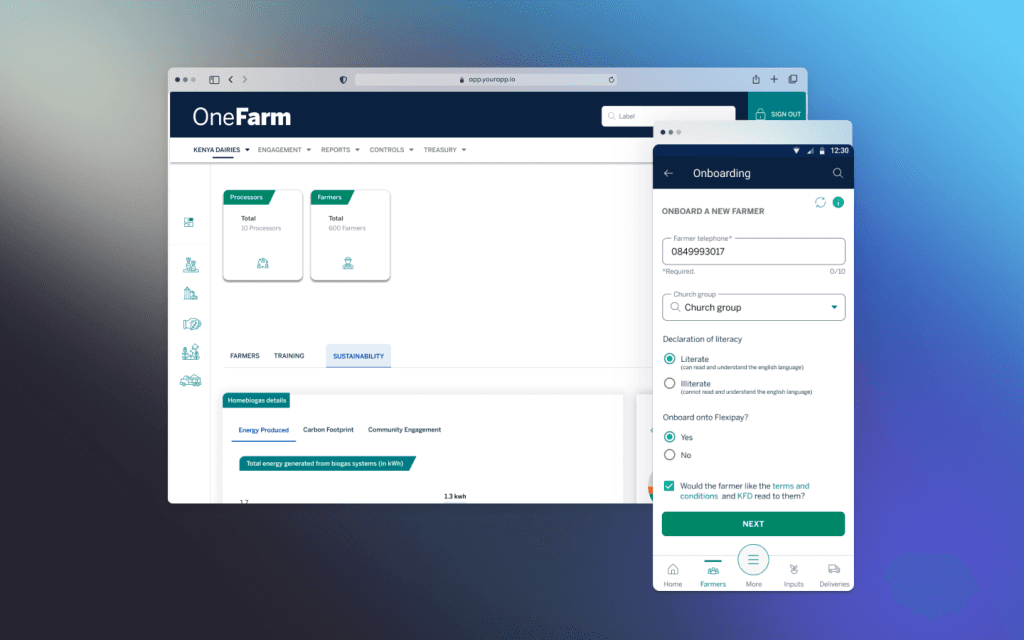
On OneFarm, field agents recorded whether a farmer could read and understand English, and farmers could ask for the terms and conditions to be read out to them. In MetaPOS I used icons wherever I could so people relied less on text.
Voice and AI are a good match here. A farmer who struggles to type a question can often ask it out loud in their own language. But this only works if the speech model understands local languages and accents, and if the answer comes back as clear speech or simple visuals, not a long paragraph of text.
Trust is earned slowly
The shop owners I met were careful with technology, and for good reason. A mistake in a sale or a payment costs them real money. They trusted MetaPOS because it was predictable. The same tap always did the same thing.
AI is not always predictable, and that is a problem for people with little room for error. When I design AI features now, I ask a few questions:
- Can the person see why the AI suggested this?
- Can they easily undo it?
- Does a person still confirm anything that involves money?
- What happens when the AI is not sure? Does it say so?
An AI that admits it does not know is worth more to a shop owner than one that sounds confident and is wrong.
Small devices, small budgets
Data costs money. Storage is limited. Every large download or heavy model eats into both. I kept MetaPOS light enough to run well on low memory devices, and I had to say no to features that would slow it down.
With AI, that means being honest about cost. Sending every request to a large cloud model may be fine in a city office. In a rural shop paying for each megabyte, a smaller model that does one job well is often the better choice.
Design for the edge first
When you design for the hardest conditions, the product usually gets better for everyone. Offline support helps people on a train. Voice helps people who are busy. Clear explanations help everyone trust the system.
AI has a real chance to help small businesses and farmers across Africa. But it will only do that if it is designed for the phones, networks and people that are actually out there.